The Opportunity and Solution
Backstory
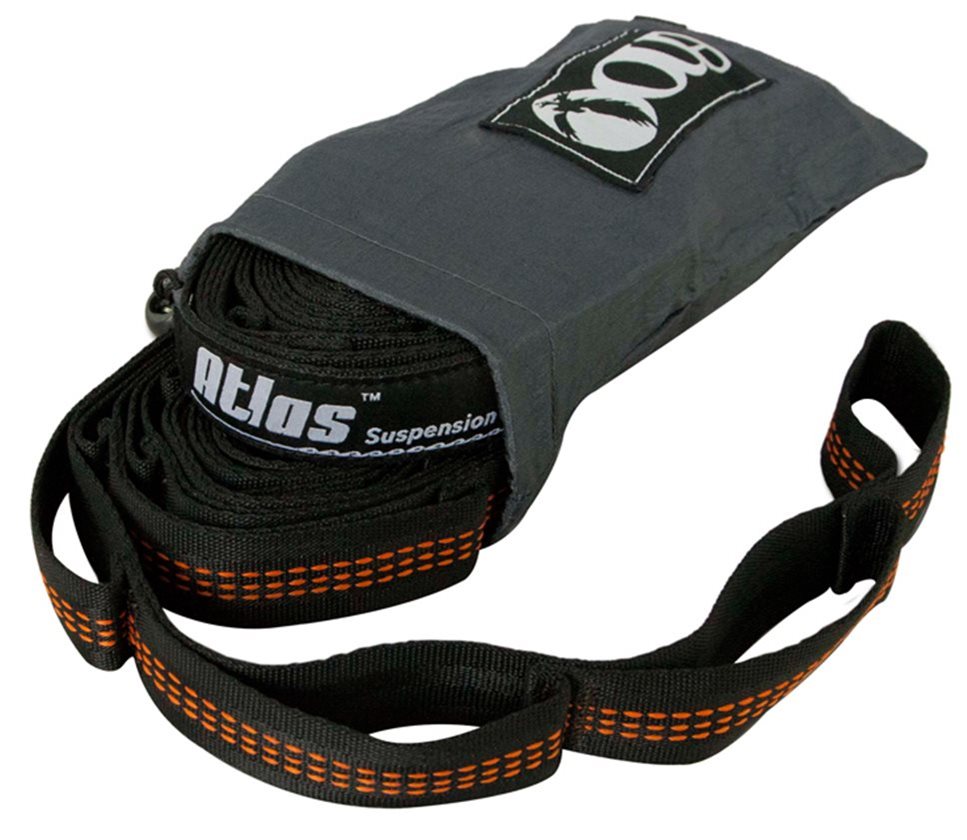
I know that there s an unmet need in the outdoor community. I'm thinking people who enjoy hiking, and camping, and generally being in nature. Specifically, those who enjoy Enoing. For those of you unaware, an Eno is a portable hammock made of a parachute-like material that folds into a small bag. Enos come with attachable straps made of a thick nylon material and come in all lengths.

Here where I noticed an opportunity: I was hiking along a trail in Boone, North Carolina. This trail goes under a huge, out or service railroad bridge. I noticed a man has stretched his Eno straps around one post of the bridge, all the way across the bridge and around the next post to support his hammock. he was reading a book. How lovely. Now on my way back, the man had finished his reading and was attempting to deconstruct his hammock. His straps were particularly long ones and he was experiencing great difficulty folding them tightly enough to fit back in the bag properly. What a pain! He must have attempted several times before giving up and stuffing the straps in his backpack.
The Opportunity
People who own Eno's are unable to efficiently and effectively deconstruct Eno straps due to their long lengths and difficulty to fold them tightly enough because of the thick material.
The Who: People who own Enos.
The What: They are unable to efficiently and effectively deconstruct Eno straps
The Why: Eno straps are very long and have thick material, so they take a long time to fold and they are difficult to fold tightly enough.
Testing the Hypothesis
Testing the Who: Are there others who have this need? There are plenty of people "who's." Everybody who owns an Eno has this need. However, the rest of the population who does not have an Eno do not have this need.
Testing the What: What are the boundaries for this need? Is this an issue with all Eno straps? or just the extra long Eno straps? I believe that Eno straps of any length are difficult to deconstruct.
Testing the Why: The Eno straps are so difficult to deconstruct because they are very long , hence they take a long time to fold. Furthermore, the Eno straps are a very thick material so it is nearly impossible to fold them tight enough to fit back in the bag. People who have Eno's would definitely blame these two factors. However, nothing can be done about them. The length of the straps ensure the Eno will reach across great lengths. The thickness of the straps is to ensure safety- if they were thinner, they would unravel. Thus, something else must be done to solve this.
I feel that there is an opportunity here to create something that makes the deconstruction of eno straps more efficient and effective.
Pursuing the Hypothesis:
I think it is important to pick other people's brains on whether they believe this opportunity exists. I decided not to interview people who this opportunity didn't apply to, because obviously there would be no market. Instead, I spoke to five people who do use Enos. This includes students who Eno in plaza, an employee at R.E.I. (an outdoor store) and a couple people from summer camp who like to Eno. and I wanted to generate unbiased responses so instead of asking them rigid questions, I led a cheerful conversation with each person to kinda feel out where they stand and then eventually got onto the topic of Eno deconstruction methods. Below I'm just going to summarize the findings of each conversation.
Interviewee #1: This person uses an Eno almost daily in plaza. It usually is the "favorite part" of their day. They have normal sized Eno straps, and love how durable they are. Overall, I learned from this person that the deconstruction process doesn't usually bother them because they aren't usually in a rush. they did however admit that they didn't understand how the straps are suppose to perfectly fit back into the back because they are so bulky. At the end of the day, they would definitely invest in something to help compact the Eno straps as long as it isn't "too expensive."
Interviewee #2: This person has similar experience to the first person. They say they appreciate the quality of Eno straps and appreciate the length so that they don;t have to worry about finding trees that are close enough together. This person actually owns 3 Enos, a single nest, a double nest, and one with a mosquito net. They've never really taken much consideration into the deconstruction process and just see it as something that "must be done." They think something to make the deconstruction process more efficient would be great, although they wouldn't invest in it themselves.
Interviewee #3: This person is very skilled in Enos and has a great understanding of how they function and the different types. Because they have so much experience with the equipment, they don't actually have a lot of trouble deconstructing the Eno straps. However, they said they get customer in the store asking for tips and tricks to fold the straps more compactly, and some customers even ask if they sell "bigger Eno bags" (which they don't). This person agrees it would be great to have something to aid in the deconstruction process, and might even entice more people to buy Enos because they could market "easy set up and break down."
Interviewee #4: This person only uses their Eno during summer camps because that's when all of her friends do. They admit they struggle greatly to take down their Eno, and it usually becomes a two person job. If there was a simpler process, they would "definitely use their Eno more.
Interviewee #5: This person uses their Eno during summer camp, and on vacations. They loves how portable it is so they can bring it anywhere. They especially like the strength of the straps so they don't feel "like their going to fall." This person has been caught in the rain in their Eno numerous times, and ends up soaking wet because of the amount of time it takes to deconstruct their Eno, and by that time, the hammock itself is wet too.
Overall
I feel that I have an even better understanding of the market. I was not surprised at all to discover that the Eno users I spoke to can see this unmet need. Although it is not something that is hindering their ability to live, it is something they are passionate enough about to see changed made. I now realize though, that because it is more of a "want" than a "need," a solution must be effective and inexpensive enough for people to want to use it.